Purpose
This purpose of this website is to help consumers, students, and business researchers learn how to use publicly available McDonald's business data to understand company performance, restaurant growth, customer trends, pricing, and business strategy. McDonald's publishes a wealth of information that extends far beyond its menu. Through annual reports, investor presentations, and market data, consumers can better understand how the company grows, competes, and responds to changing economic conditions.
Data sub-genre focus
Business performance in the restaurant industry:
- Restaurant locations
- Annual revenue and sales
- Restaurant growth
- Franchise ownership
- Customer behavior

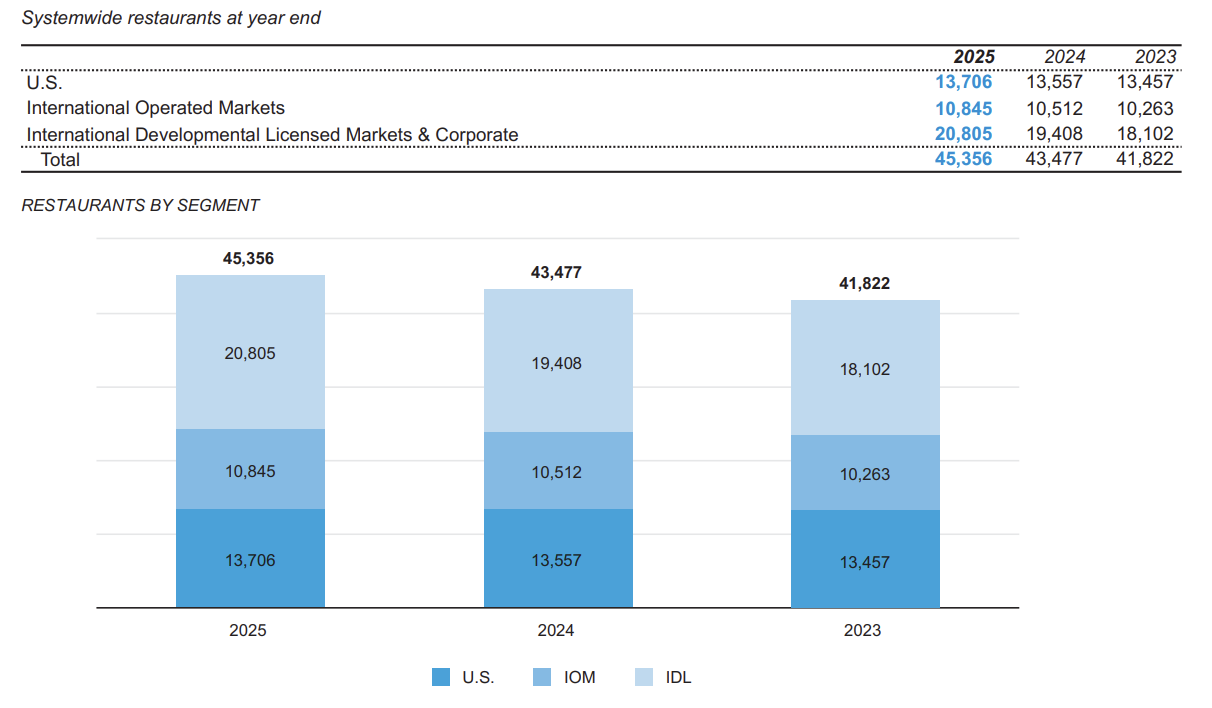 Figure 1.1 McDonald's reported 45,356 restaurants worldwide in 2025, increasing from 43,477 in 2024.
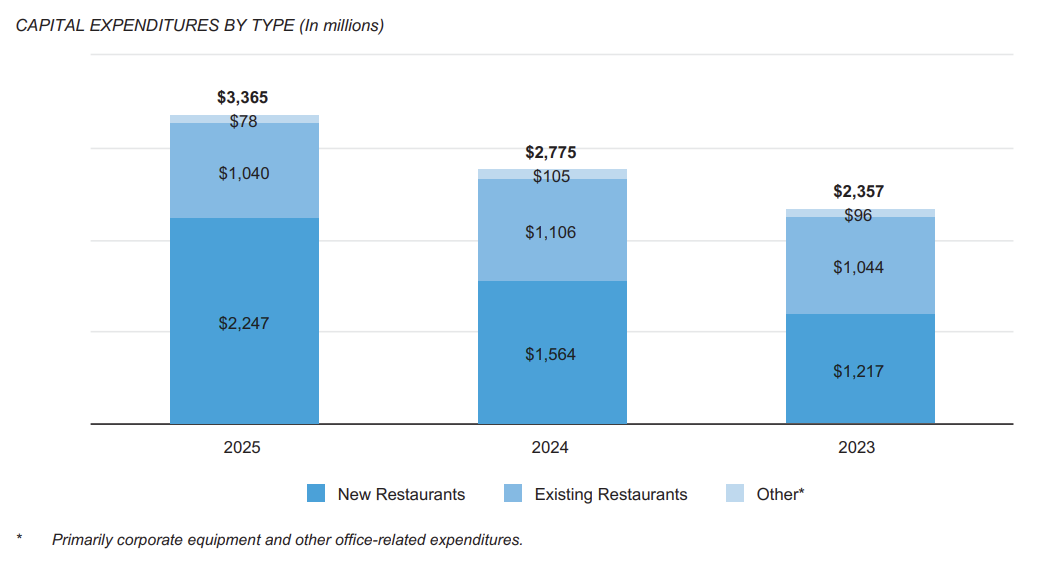 Figure 1.2 Approximately 96% of McDonald's restaurants are franchised, reducing operating costs while allowing rapid expansion.
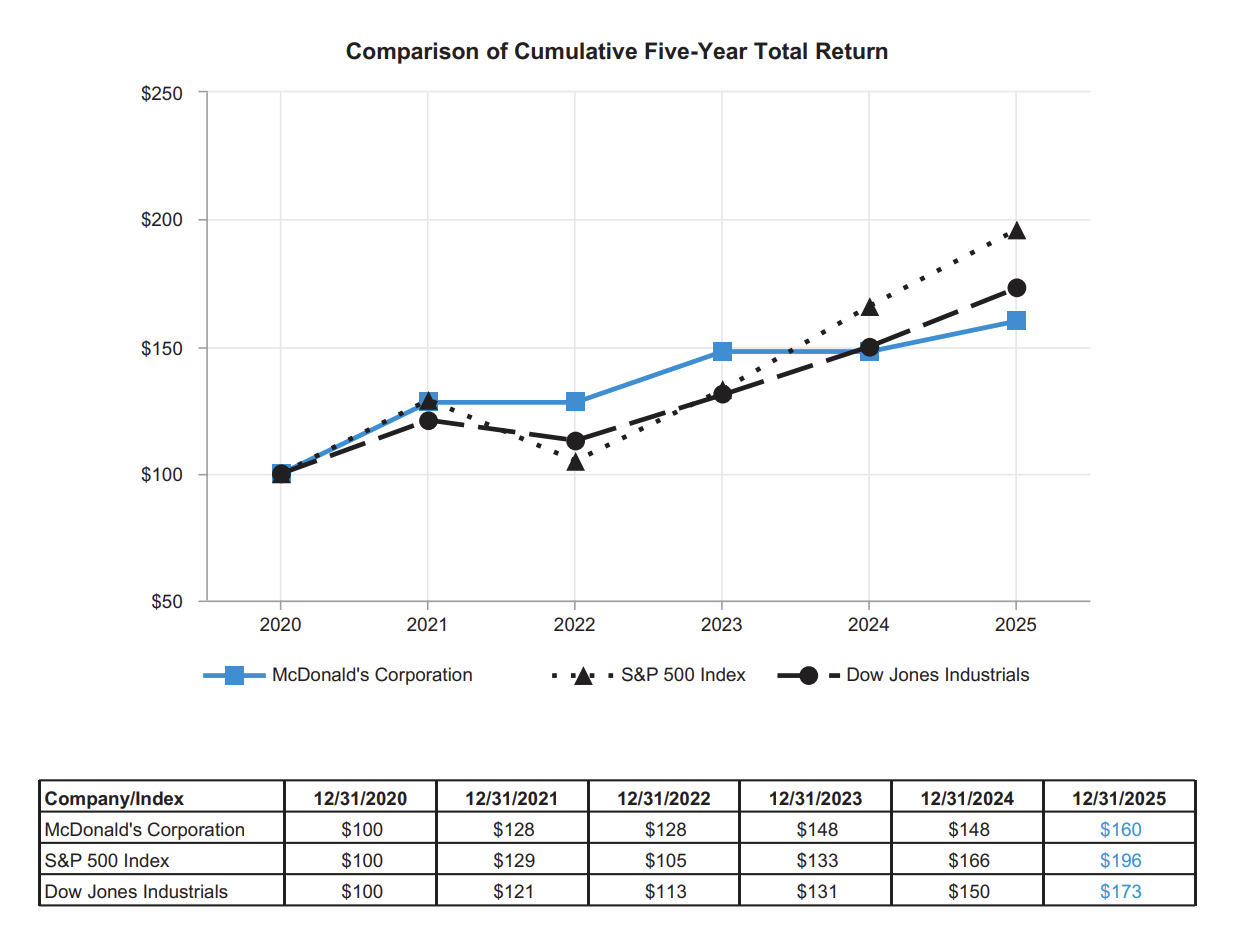 Figure 1.3 McDonald's cumulative shareholder returns in comparison to the Standard&Poor's 500 Stock Index and the DJIA companies.
One of the strongest indicators of McDonald's long-term success is its continued restaurant expansion. Growing by nearly 1,900 restaurants in a single year demonstrates that the company continues to invest in new markets while maintaining demand in existing ones. With restaurants located across more than 100 countries, customers are rarely far from a McDonald's location. This widespread accessibility makes the brand a convenient choice for travelers, commuters, and everyday consumers, increasing the likelihood of repeat purchases simply because of its availability.
McDonald's franchise model is one of the company's greatest competitive advantages. Rather than owning and operating every restaurant itself, the company relies primarily on franchisees to invest in new locations and manage day-to-day operations. This allows McDonald's to expand much more quickly while reducing the financial risks associated with opening and operating thousands of restaurants.
Consumers also benefit from this model because franchised restaurants are expected to maintain the same quality standards, menu offerings, and customer experience regardless of location. Customers generally know what to expect when ordering products such as a Big Mac or World Famous Fries, creating trust and reducing uncertainty when visiting unfamiliar locations. At the same time, McDonald's allows regional menu customization, enabling restaurants to appeal to local tastes while maintaining a globally recognizable brand.
The cumulative shareholder return chart demonstrates how McDonald's has performed as a long-term investment compared with broader stock market indexes. Although market conditions fluctuate over time, McDonald's has consistently remained competitive because of its stable business model and predictable cash flows.
Unlike many companies that depend on rapid innovation, McDonald's generates steady revenue through a combination of franchising, real estate ownership, and consistent customer demand. Investors often view this consistency as a sign of resilience, making the company attractive even during periods of economic uncertainty. The shareholder return data reinforces the idea that McDonald's long-term business strategy has continued creating value for investors.
Rather than relying on a single initiative, McDonald's growth strategy combines several complementary business priorities known as Accelerating the Arches. This strategy focuses on three core pillars—Maximize Marketing, Commit to the Core, and Double Down on the D's—that work together to increase customer engagement and drive sales growth. The "Maximize Marketing" pillar emphasizes culturally relevant advertising campaigns that strengthen emotional connections with customers. "Commit to the Core" focuses on continuously improving iconic menu items such as the Big Mac, Chicken McNuggets, and World Famous Fries while maintaining the consistency customers expect. Finally, "Double Down on the D's" expands the company's digital ecosystem through mobile ordering, loyalty programs, delivery services, drive-thru improvements, and restaurant development.
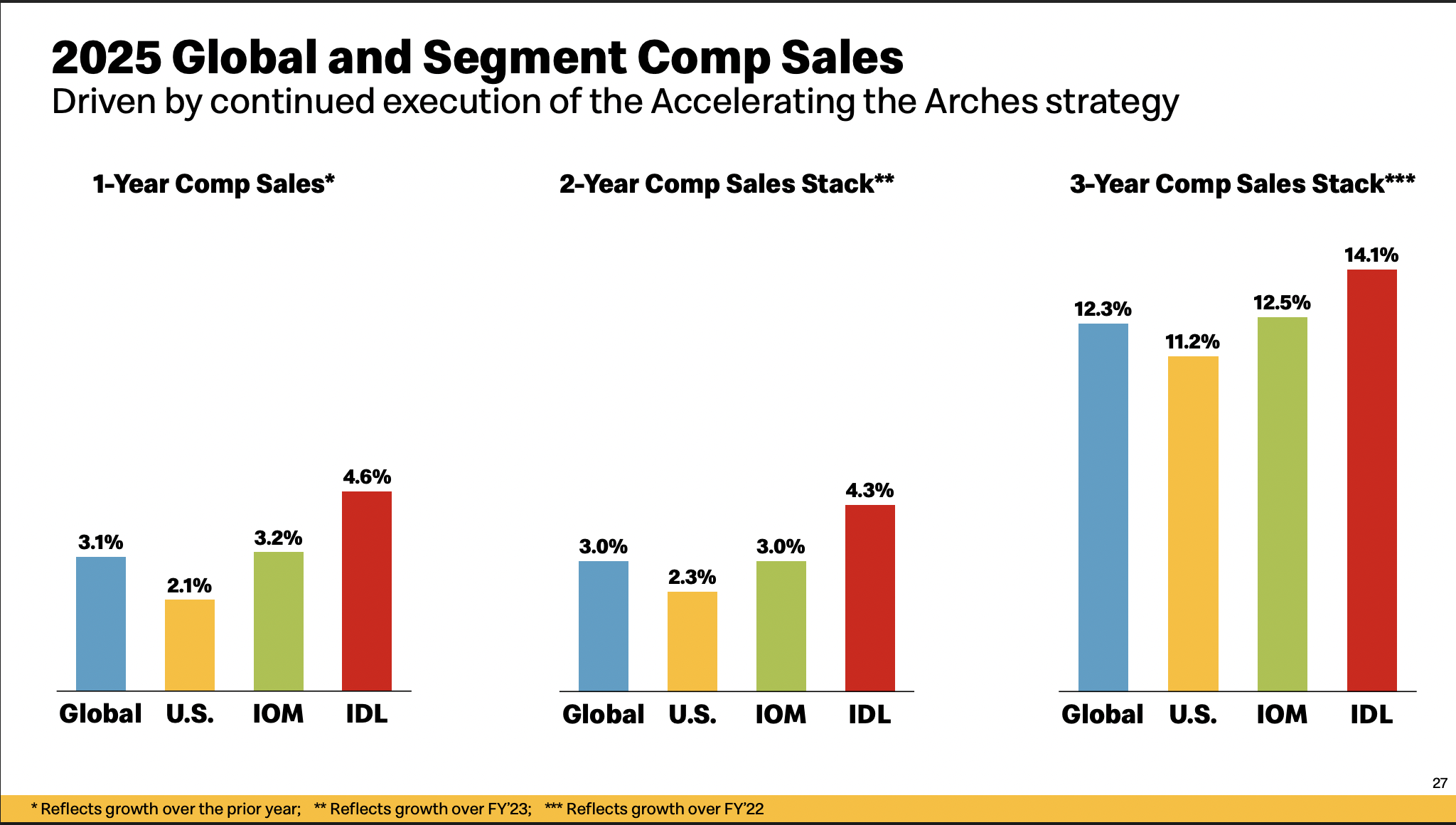
Figure 2.1 McDonald's 2025 global sales performance highlighting the company's "Accelerating the Arches" growth strategy.
These initiatives demonstrate that McDonald's growth is not solely dependent on opening new restaurants. Instead, the company also increases sales by improving convenience, strengthening customer loyalty, and enhancing operational efficiency. Consumers can observe how multiple business strategies combine to support sustainable long-term growth.
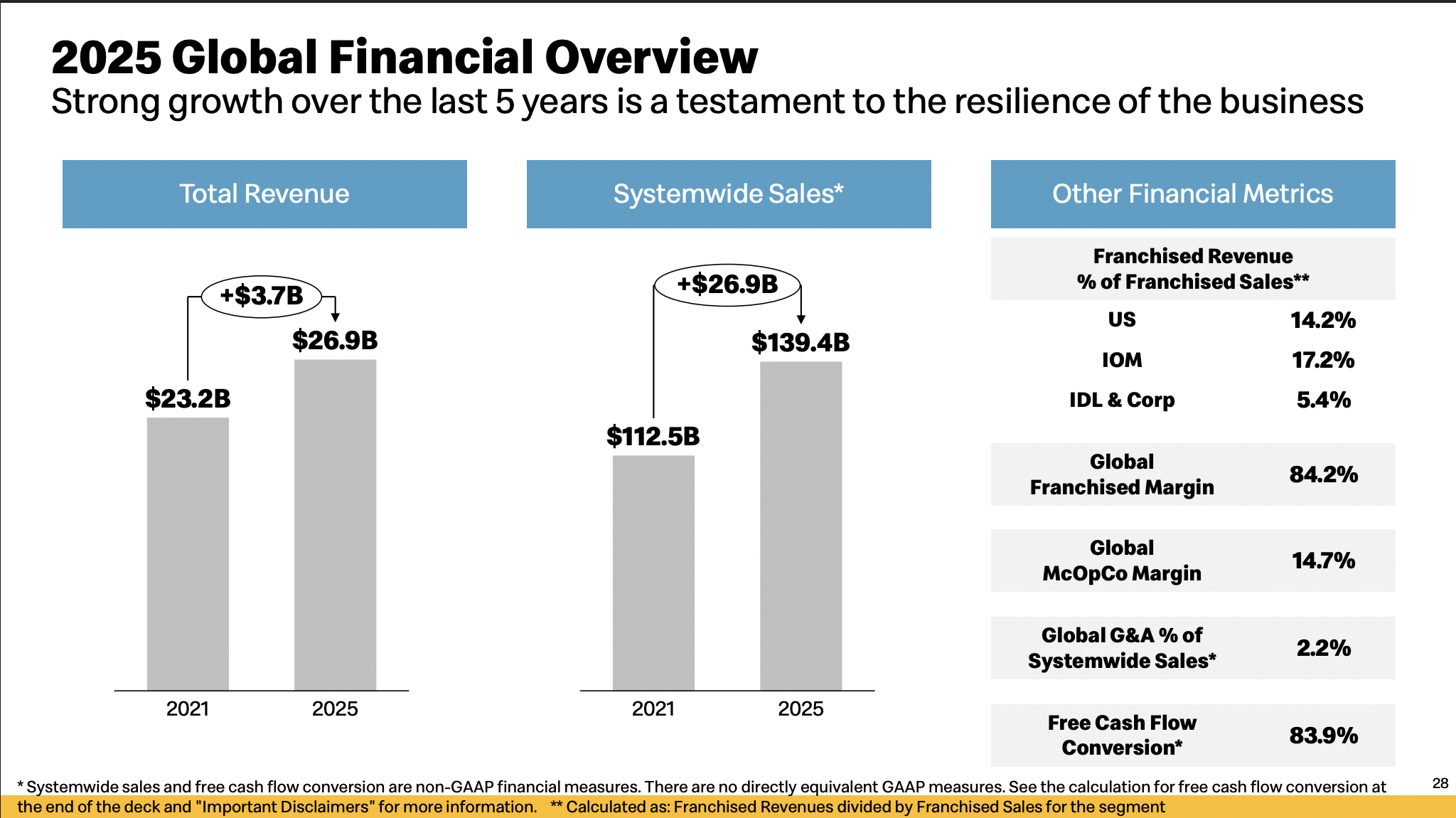
The five-year financial overview illustrates the company's ability to produce consistent financial results despite changing economic conditions. Over the past several years, McDonald's has experienced inflation, supply chain disruptions, and changing consumer spending habits, yet it has continued generating strong revenue and systemwide sales. This financial consistency demonstrates the resilience of McDonald's business model. Rather than experiencing dramatic fluctuations, the company has maintained steady growth by balancing restaurant expansion, franchising, pricing strategies, and digital innovation. Investors often interpret this stability as evidence of an organization capable of adapting to market challenges while continuing to create long-term value.

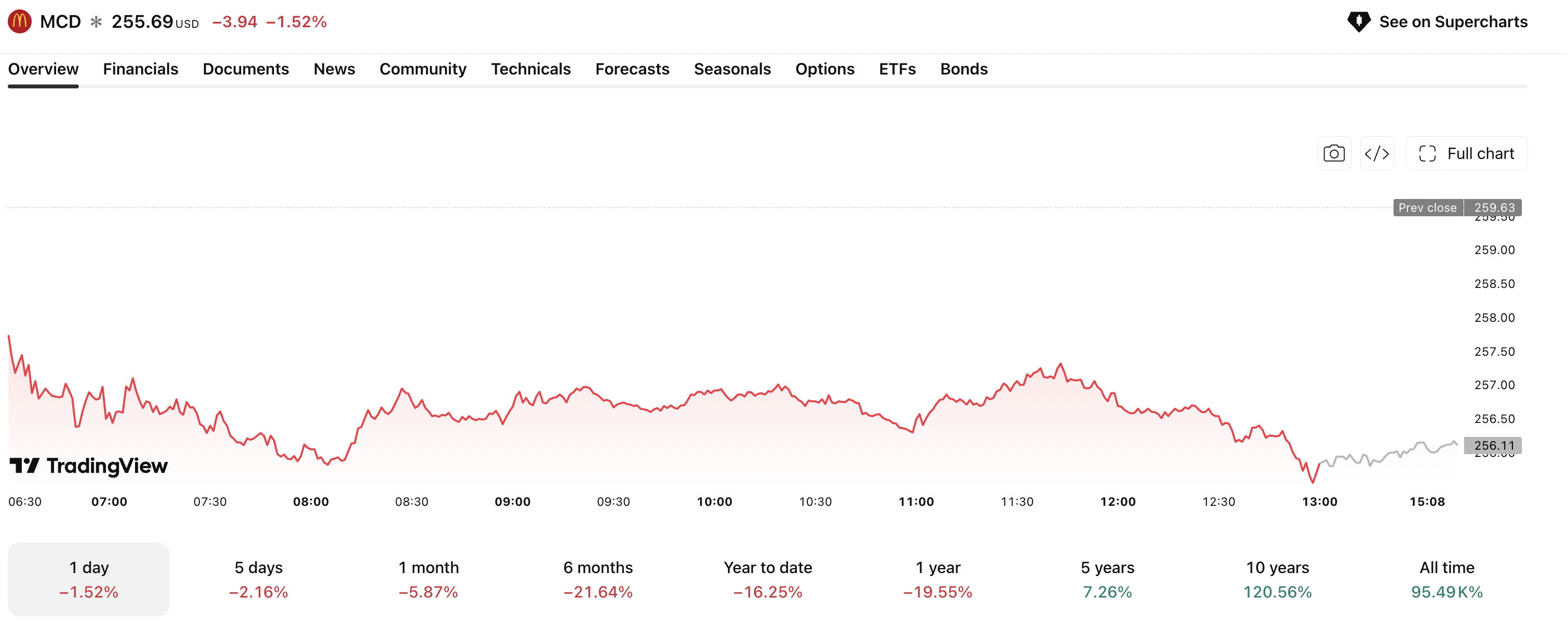
Figure 3.1 McDonald's Corportation Stocks chart alongside news discussing the company's recent menu strategy during a period of share price weakness.
The TradingView market analysis provides insight into how McDonald's responds when investor confidence weakens. Rather than introducing a completely new business direction, the company has focused on strengthening the products and menu items that customers already know and trust, bringing back the Spicy Chicken McNuggets nationwide on Sep. 1. As the article states, "The launch arrives at an important moment for investors: McDonald's shares just touched a 52-week low of $259.85, while U.S. customer traffic remains under pressure".
This approach aligns closely with the "Commit to the Core" strategy highlighted in the Investor Overview presentation. During periods of slower growth or declining share prices, McDonald's continues emphasizing familiar products, value offerings, and customer convenience rather than abandoning its established business model. This consistency reflects one of the company's greatest strengths: building upon strategies that have proven successful over decades instead of reacting impulsively to short-term market fluctuations.
When considered alongside the Annual Report and Investor Overview, the stock chart reinforces a broader conclusion. Although McDonald's, like any public company, experiences periods of market volatility, its long-term business strategy remains centered on stable restaurant expansion, franchising, operational efficiency, and customer loyalty. These characteristics help explain why the company has demonstrated resilience through changing economic conditions while continuing to generate long-term growth.
Consumer Insights
Insight 1: Accessibility Encourages Purchases
As seen in McDonald's Annual report, McDonald's operates more than 45,000 restaurants across more than 100 countries. Because locations are commonly found near highways, shopping centers, neighborhoods, and airports, customers often choose McDonald's due to convenience rather than planning a special trip.
Insight 2: Standardization Builds Trust
The Investor Overview shows that customers expect menu items such as a Big Mac or French fries to taste similar regardless of location. At the same time, McDonald's adapts selected menu items to regional preferences, creating a balance between consistency and localization.
Insight 3: Long-Term Strategy Creates Business Resilience
The TradingView article shows that the company continues relying on proven strategies rather than making drastic changes during challenging periods. When this market data is compared with the Annual Report's restaurant expansion and the Investor Overview's "Accelerating the Arches" strategy, a clear pattern emerges: McDonald's focuses on strengthening its core menu, improving customer convenience, and investing in long-term growth instead of reacting to short-term market pressures. A consumer can use all three sources together to understand that temporary declines in share price do not necessarily indicate a weak business.
Examining these three sources together provides a comprehensive understanding of McDonald's business strategy. The Annual Report explains what the company has accomplished through restaurant expansion, franchising, and financial performance. The Investor Overview explains how those results are achieved through marketing, digital innovation, and operational strategy. Finally, the TradingView market analysis demonstrates why these long-term strategies continue to matter during periods of market uncertainty. Together, these resources show that McDonald's success is not based on a single factor. The company's long-term growth is driven by a combination of global accessibility, a highly efficient franchise system, consistent product quality, digital innovation, customer loyalty, and disciplined business strategy. A motivated consumer or investor can use these publicly available data sources to gain meaningful insights into how one of the world's largest restaurant companies continues to adapt and remain competitive.
Sample Analysis
A motivated consumer can combine all three resources to answer a question such as, "Why has McDonald's remained one of the world's largest and most successful restaurant companies?"
Begin with the McDonald's 2025 Annual Report to examine restaurant growth, franchise ownership, and overall business performance. These statistics show that the company continues expanding globally while relying on a highly successful franchise model.
Next, use the McDonald's 2026 Investor Overview to understand how McDonald's achieves this growth. The presentation explains the "Accelerating the Arches" strategy, highlighting investments in digital ordering, loyalty programs, delivery, drive-thru operations, and continuous improvements to its core menu. These initiatives demonstrate that growth is driven by both operational improvements and customer engagement—not simply by opening more restaurants.
Finally, compare these findings with the TradingView stock analysis. Although the article discusses a period of share-price weakness, it also shows that McDonald's responds by reinforcing the same long-term strategies identified in the other sources, such as emphasizing familiar menu items and customer value. This consistency suggests that the company prioritizes sustainable growth over short-term market reactions.
By analyzing these resources together, consumers can conclude that McDonald's success is built on several interconnected factors: a large global restaurant network, an efficient franchise system, continuous investment in digital technology, and a long-term business strategy centered on consistency, convenience, and customer loyalty. Rather than relying on a single data source, comparing multiple perspectives provides a more complete understanding of how business decisions translate into long-term financial performance.
AI Acknowledgement
AI was used to polish and organize my insights. Specifically, AI was used to reword the Purpose and Sample Analysis content.